Yearly Work Hours Guide | Optimize Payroll & Compliance with MyShiftCalc
Calculating yearly work hours might seem like a straightforward task, but for businesses, HR professionals, and employees alike, it's a critical component of accurate payroll, effective budgeting, and robust compliance. Beyond simply multiplying weekly hours by 52, a myriad of factors – including holidays, paid time off (PTO), overtime, and varying state laws – can significantly impact the true total. Understanding and accurately tracking these hours is essential for managing labor costs, ensuring fair compensation, and adhering to complex labor regulations. This comprehensive guide will walk you through the nuances of yearly work hours and introduce you to MyShiftCalc, your indispensable tool for precision and peace of mind.
Why Accurate Yearly Work Hour Calculations Matter
Precision in yearly work hour calculations extends far beyond just cutting a paycheck. It directly impacts:
- Payroll Accuracy: Miscalculations can lead to underpayment or overpayment, resulting in employee dissatisfaction or financial loss for the company.
- Compliance with Labor Laws: Adhering to federal regulations like the Fair Labor Standards Act (FLSA) regarding overtime, and a multitude of state-specific laws, requires meticulous tracking of hours worked. Non-compliance can lead to hefty fines and legal challenges.
- Budgeting and Financial Planning: Accurate labor cost projections are vital for annual budgeting, forecasting, and strategic decision-making.
- Overtime Management: Proactive calculation of potential yearly overtime helps businesses manage costs and avoid unexpected expenses.
- Employee Benefits and PTO Tracking: Yearly hours often form the basis for accrual of vacation, sick leave, and other benefits.
- Tax Implications: From calculating Full-Time Equivalents (FTEs) for tax credits to understanding the tax burden of payroll, accurate hours are fundamental.
- Workforce Management: Identifying potential burnout risks or opportunities for optimizing staffing levels.
Understanding the Standard Work Year
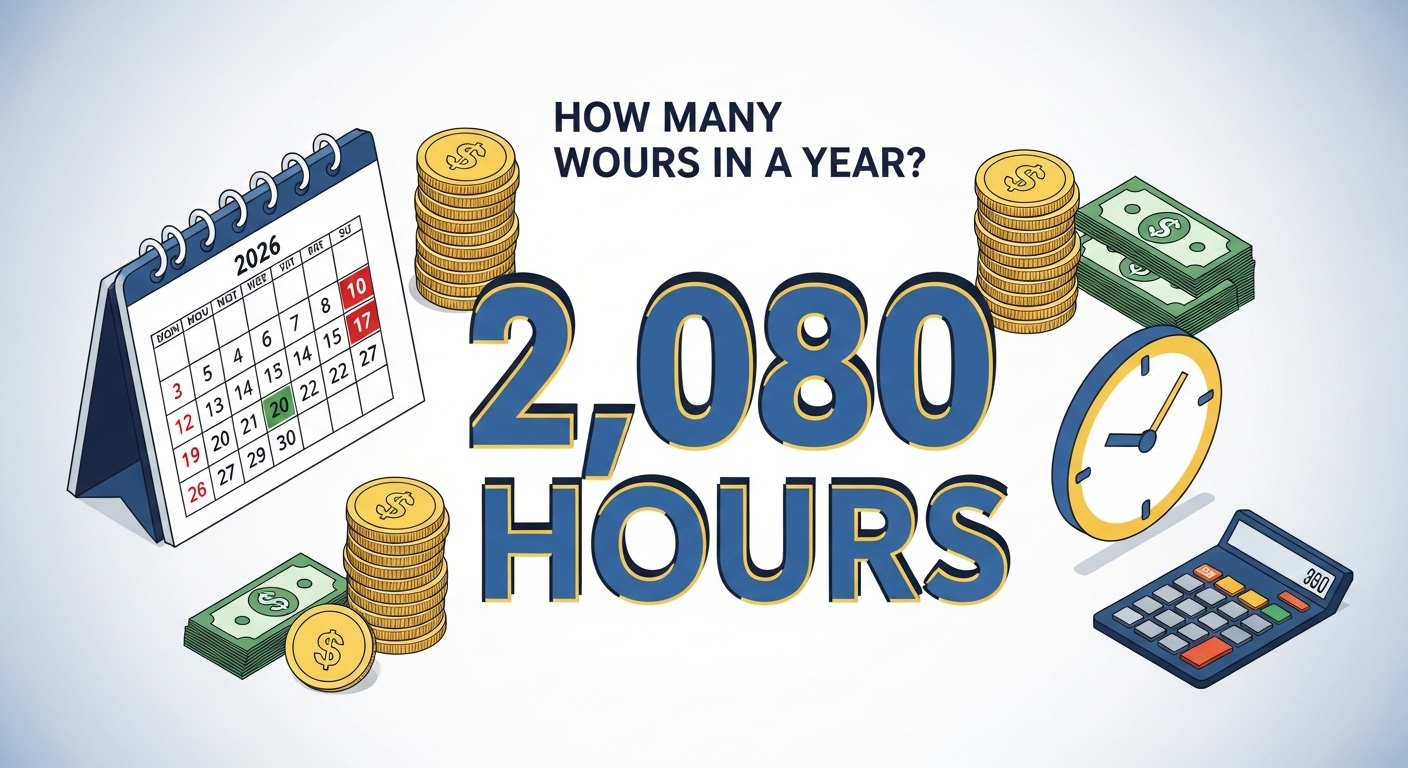
A standard work year typically comprises 52 weeks. For a full-time employee working 40 hours per week, this would theoretically equate to 2,080 hours (40 hours/week * 52 weeks). However, this baseline figure rarely reflects the actual "hours worked" or "hours paid" due to various factors:
- Paid Holidays: Most companies offer paid holidays, which are counted as paid hours but not hours actually worked.
- Paid Time Off (PTO): Vacation, sick leave, and personal days reduce the actual hours worked but contribute to paid hours.
- Unpaid Leave: FMLA leave or other unpaid absences reduce both hours worked and paid.
- Overtime: Hours worked beyond the standard workweek significantly increase the total.
- Leap Years: Every four years, February has 29 days instead of 28, adding an extra day (and potentially 8 hours for a full-time employee) to the year's total.
MyShiftCalc: Your Yearly Work Hours Companion
Navigating these complexities manually is time-consuming and prone to error. MyShiftCalc is designed to streamline and automate the calculation of yearly work hours, providing unparalleled accuracy and insights. Whether you're an HR manager forecasting labor costs, a payroll specialist ensuring compliance, or an employee understanding your compensation, MyShiftCalc simplifies the process.
How to Use MyShiftCalc for Yearly Work Hours
MyShiftCalc offers an intuitive interface to calculate yearly work hours with precision. Here’s a general guide:
- Input Standard Weekly Hours: Start by entering the typical number of hours an employee is scheduled to work per week (e.g., 40 for full-time, 20 for part-time).
- Specify Start and End Dates: Define the 12-month period you wish to calculate (e.g., Jan 1 - Dec 31).
- Account for Paid Holidays: Enter the number of paid company holidays observed within the specified year. MyShiftCalc will subtract these "worked" hours but retain them as "paid" hours for total compensation.
- Enter PTO/Vacation Allotment: Input the total hours of paid time off (vacation, sick leave, personal days) an employee is allocated for the year. This will adjust the "hours worked" total.
- Include Overtime Projections (Optional): If you have an estimate for regular or consistent overtime hours per week/month, MyShiftCalc can factor this in for a more comprehensive total.
- Consider Unpaid Leave: If known, any significant blocks of unpaid leave can also be factored in to get a true "hours worked" total.
- Leap Year Adjustment: MyShiftCalc automatically accounts for leap years, ensuring an extra day (and corresponding hours) is accurately included when applicable.
- Review and Generate Report: The tool will quickly calculate and display various metrics, including:
- Total theoretical hours (e.g., 40 hours x 52 weeks)
- Total hours worked (excluding holidays/PTO)
- Total hours paid (including holidays/PTO)
- Potential overtime hours
Key Formulas Used in Yearly Work Hour Calculations
MyShiftCalc employs robust formulas to ensure accuracy. Here are some of the fundamental calculations:
- Basic Yearly Hours: Weekly Standard Hours × 52 Weeks (or 52.14 weeks for more precision, or 52.28 for a leap year, depending on the tool's exact calendar calculation).
- Adjusted Yearly Worked Hours: (Weekly Standard Hours × Number of Weeks in Period) - Total Hours of Paid Holidays - Total Hours of PTO - Total Hours of Unpaid Leave.
- Total Yearly Paid Hours: (Weekly Standard Hours × Number of Weeks in Period) + Total Overtime Hours (assuming holidays and PTO are already included in standard paid hours).
- Full-Time Equivalent (FTE) Calculation: Total Yearly Hours Worked by Employee ÷ Total Yearly Hours for a Full-Time Employee (e.g., 2080 or 2088 for a leap year). This is crucial for benefits eligibility, tax purposes, and staffing analysis.
- Effective Hourly Rate (for salaried employees): Annual Salary ÷ Total Yearly Paid Hours.
MyShiftCalc automates these calculations, ensuring that the nuances of a floating calendar and varying employee schedules are correctly handled without manual intervention.
Navigating State-Specific Work Hour Laws
While the FLSA sets federal minimum standards, state laws often impose stricter requirements that directly impact how yearly hours are calculated and compensated. Neglecting these can lead to significant legal exposure:
- Overtime Thresholds: Some states have daily overtime (e.g., California after 8 hours in a day) in addition to weekly overtime (after 40 hours). Others have specific rules for 7th consecutive day of work.
- Meal and Rest Breaks: Many states mandate paid or unpaid meal and rest breaks, affecting the calculation of "hours worked." Non-compliance can result in penalties.
- Predictive Scheduling Laws: In some cities/states (e.g., New York, Seattle), employers must provide advance notice of schedules and pay "predictability pay" for last-minute changes, adding complexity to payroll.
- Minimum Wage: State minimum wage laws vary greatly and impact the effective hourly rate for all hours paid.
- Specific Industry Regulations: Certain industries (e.g., healthcare, agriculture) may have unique rules regarding shifts, on-call time, and consecutive work hours.
As an expert system, MyShiftCalc doesn't directly store all state laws but provides the granular tracking and reporting capabilities needed for businesses to apply these rules. By accurately logging regular hours, overtime, breaks, and other variables, companies can generate reports that can then be cross-referenced with relevant state statutes to ensure full compliance and proper payroll execution.
Conclusion
Accurate yearly work hour calculations are the bedrock of sound HR, compliant payroll, and intelligent financial management. From federal FLSA guidelines to intricate state-specific mandates, the complexities can be daunting. MyShiftCalc demystifies this process, offering a powerful, user-friendly tool to ensure every hour is accounted for correctly, every employee is paid accurately, and your business remains firmly within legal boundaries. Take the guesswork out of yearly work hours and empower your organization with precision – try MyShiftCalc today.